📋 Hume Band 2.0 Review 2026: battery, blood pressure trends, Whoop & Apple Watch comparison and verdict — independent analysis by CheckCentre.co.nz
Health Wearable Review
Hume Band 2.0 Review 2026: A Longevity Tracker With No Subscription — Does the 14-Day Battery Really Hold Up?
Hume promises up to 14 days of battery, blood pressure trend insights and early health signals — with no monthly fee for core tracking. We reviewed the specs, Hume's official store details and owner feedback to see what holds up, where its limits are, and who should buy it.
HW
Hannah Walker · Product Reviewer · November 2026
Recommended9.6/10
Excellent
9.6
★★★★★
Test Result: Excellent
Up to 14-day battery, no subscription required for core tracking, and longevity scores most wearables don't offer.
📅 Analysis: November 2026 · Hume's official store shows 4.8/5 from 34,200+ reviews
Hume Band 2.0: a screenless health and longevity tracker built to be worn 24/7
🔍 What you'll learn in this review:
Is the Hume Band 2.0 worth it? Does the 14-day battery claim hold up? How does it compare with Whoop, Oura and the new Garmin Cirqa — and do you really avoid a subscription? We went through the specs, Hume's official store details and owner feedback so you don't have to.
📋 Quick Facts: Hume Band 2.0
Product type
Health & longevity wristband (screenless wearable)
Maker
Hume Health
Price
Varies by bundle and current promotion — see the official store
Warranty
1 year included · extended cover optional
Delivery
Free shipping to New Zealand
Returns
45-day returns window
Availability
Official Hume store
Best for
Sleep, recovery and long-term health tracking without a monthly fee
📋 Key Takeaways
✓Our verdict: Worth it if you want sleep, recovery and long-term health data without paying every month. There is one type of buyer it isn't designed for (details below).
✓Price: one-off purchase; varies by bundle (1, 2 or 3 Bands) and current promotion — check today's price on the official store
✓Strengths: up to 14-day battery, no required subscription, blood pressure trend insights, IP68, free shipping and 45-day returns
–Good to know: AI coaching is part of the optional Premium membership; blood pressure data is trend-based, not a cuff replacement
ℹConsumer NZ: no published Consumer NZ review of the Hume Band 2.0 found at the time of our analysis
The Hume Band 2.0 is an established product from Hume Health — the same company behind the Hume Pod body composition scale. According to Hume, the wristband (often searched for as Hume Band 2.0, Hume health band or simply Hume Health) tracks heart rate variability, blood oxygen, skin temperature, sleep stages, strain and recovery, and in its second generation adds cardiovascular and blood pressure trend insights.
The questions buyers actually ask are more specific: Is the Hume Band worth it? How does it compare with Whoop, an Apple Watch, the Fitbit Air or the Amazfit Helio Strap? How do you wear it? Do you really skip the subscription? We went through the official spec sheet, Hume's official store details and owner feedback to answer each one.
The short answer: yes for most people — with one clear limit on who should buy it.
🔬 How we reviewed it
We compared the Hume Band 2.0's official specifications with Whoop, Apple Watch, Fitbit Air, Amazfit Helio Strap, Garmin Cirqa and Oura Ring, read through Hume's official store page and FAQ, and looked at recurring patterns in owner feedback. Where a figure comes from Hume itself rather than independent testing, we say so.
Is the Hume Band Worth It?
In short: yes, for anyone who wants detailed health tracking without a recurring bill. Many recovery bands keep your data behind a membership. Hume's model is a one-off purchase: core tracking and the Hume Health app are included, and the optional Premium plan only adds AI coaching on top. Add a battery that Hume rates at up to 14 days, free shipping and a 45-day returns window, and the Band 2.0 becomes one of the lowest-maintenance ways to track sleep and recovery in 2026.
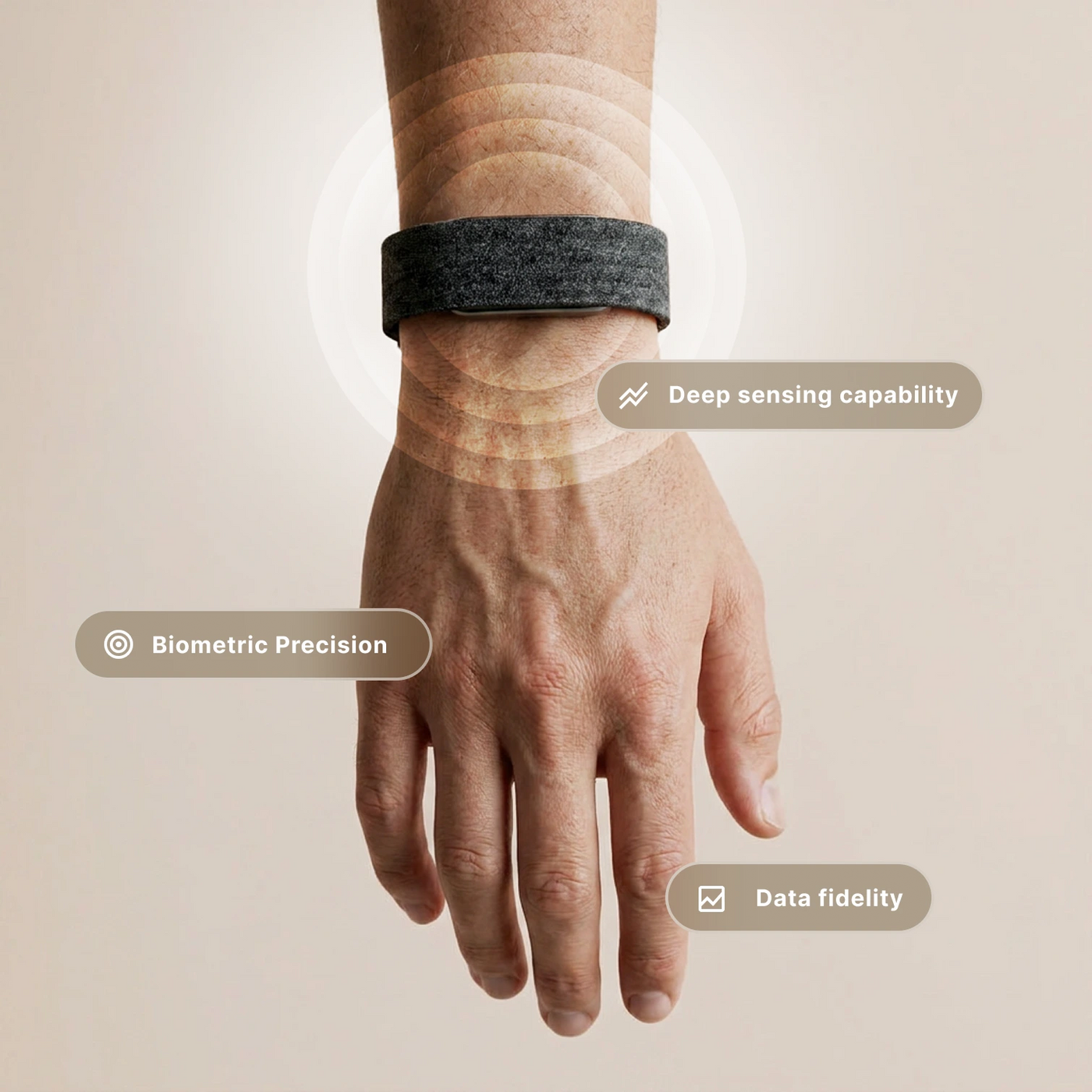
The four upgrades Hume highlights in the Band 2.0: longer battery, better accuracy, a softer strap and cardiovascular trend insights.
✓ Pros
No subscription required for core tracking
Up to 14-day battery on one charge (Hume's rating)
Blood pressure trend insights, no cuff
Longevity scores: Pace of Aging, Metabolic Momentum
IP68 rated, according to Hume
45-day returns window + free shipping
Pairs with the Hume Pod scale
– Good to know
AI coaching is part of the optional Premium membership
Blood pressure data shows trends, not diagnostic readings
Longevity figures come from Hume's own data
Not a full smartwatch (no apps, calls or maps)
📤 Know someone who tracks their health? Share this review
Official Hume store — 45-day returns, free shipping
What Is the Hume Band 2.0? The Longevity Wearable Explained
The Hume Band 2.0 is a lightweight, screenless wristband that measures your body around the clock and turns the raw data into a handful of scores in the Hume Health app. Where most fitness trackers stop at steps and heart rate, Hume focuses on healthspan: whether your daily habits are moving your health in a favourable direction over time.
🔋
Up to 14-day battery
Charge about twice a month and keep tracking day and night
❤️
Heart & BP trends
HRV, resting heart rate, SpO2 and blood pressure trends over time
😴
Sleep & recovery
Sleep stages, recovery and daily strain in one morning view
🧬
Longevity scores
Pace of Aging, biological age estimate and Metabolic Momentum
It works on its own, but it was designed to pair with the Hume Pod scale: the Band tracks how you live, the Pod measures what that does to your fat, muscle and water. Together they give a fuller picture than either device alone — see our Hume Body Pod review for the scale side.
How Does the Hume Band 2.0 Work?
According to Hume, the underside of the Band uses 5 LEDs and 4 photodiodes that shine light into your skin and read the reflected signal many times per minute. From that signal the Band derives heart rate, heart rate variability and blood oxygen, while a temperature sensor follows your skin temperature overnight. The Hume Health app then turns those streams into daily scores.
The Band 2.0 sensor array: 5 LEDs and 4 photodiodes sampling continuously, with improved signal processing over the first generation.
Recovery score: a morning read built from HRV, resting heart rate and last night's sleep
Metabolic Momentum: whether your habits are trending towards better or worse long-term health
Pace of Aging: a directional estimate of how your body is ageing compared with your calendar age
Cardiovascular & blood pressure trends: changes across days and habits rather than single readings
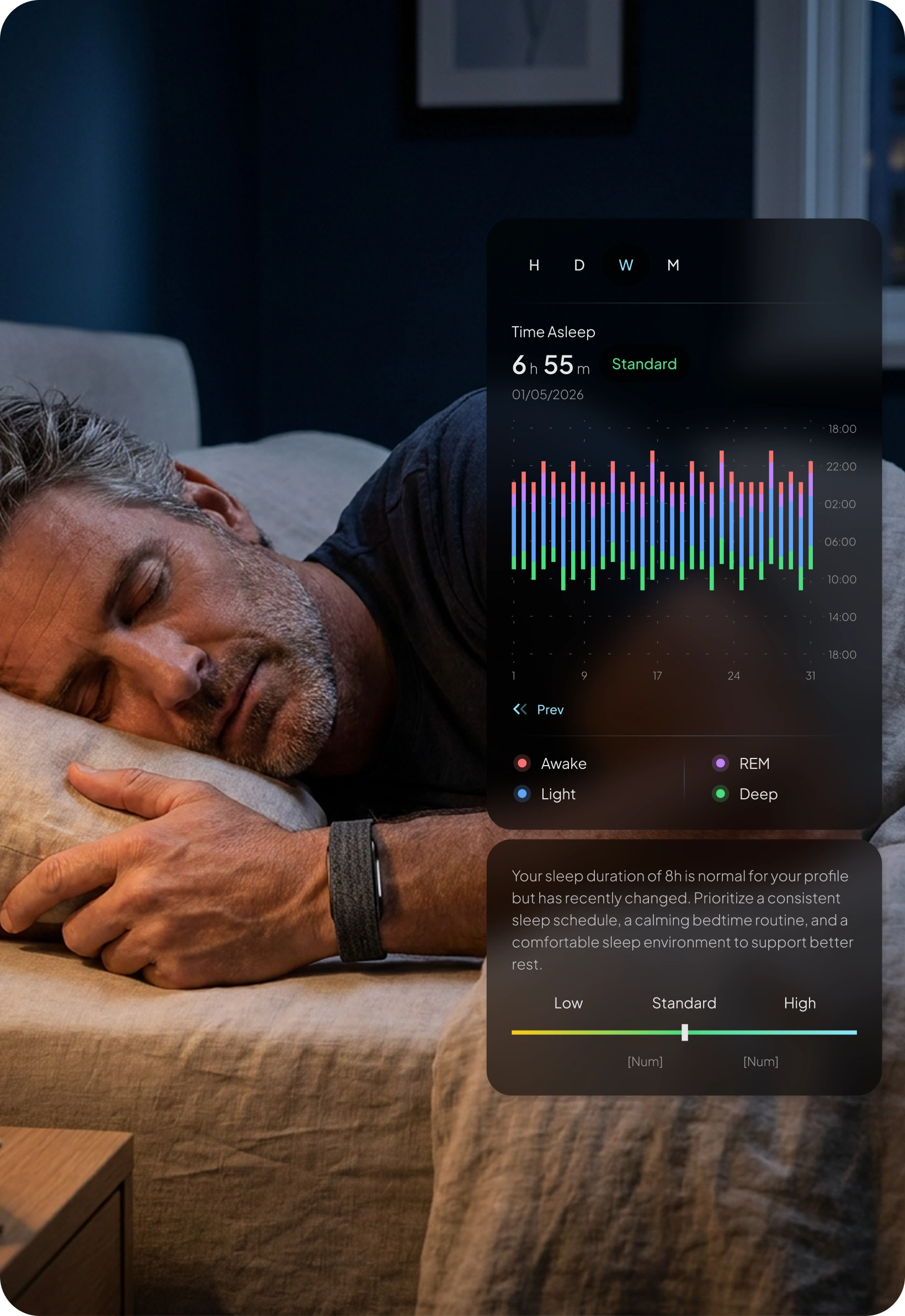
Sleep stages: light, deep and REM sleep, plus time awake, every night
💡 For the sceptics:
Wrist sensors can't diagnose disease, and the Band is a general wellness product, not a medical device. Its blood pressure feature shows trends, not measurements: for actual readings, use a validated upper-arm cuff monitor. Treat any trend as a prompt to speak to your GP, not as a diagnosis. Hume's biological-age and lifespan figures come from its own user data — useful for motivation and trends, not peer-reviewed proof.
Full specs and today's price on the official store
Hume Band Reviews: What Do Owners Report?
Hume's official store shows an average of 4.8 out of 5 from more than 34,200 reviews of the Band. These are the themes that come up in the reviews Hume publishes on its own site (individual experiences and results may vary):
Battery life: owners point to how long the Band runs between charges — one review on humehealth.com mentions still having over half the battery left after 16 days of continuous use.
Switching from other trackers: several reviewers moved over from Whoop or other wearables and say the Hume Band goes beyond step counts and heart rate by showing how daily habits affect long-term health.
Band plus Pod: some owners say they get more value from combining the Band with the Hume Pod scale than from a smartwatch alone.
Sleep tracking is where the long battery pays off: total sleep, sleep stages and recovery, night after night.
★★★★★
“Bought it on a whim and now can't imagine life without it. It has become my daily health coach — it tracks things I didn't know mattered, like metabolic momentum, and shows how my choices affect my body. The app is sleek and I love the weekly reports. My partner ordered one too.”
J
Jenny
Customer review on humehealth.com · results may vary
★★★★★
“I've tried every health tracker out there. Most just count steps or monitor heart rate, but this one tracks metabolic momentum and capacity to show how my daily habits affect my long-term health. The app is easy to understand, and small tweaks to my meal timing and sleep routine have made a big difference to my energy.”
E
Emily
Customer review on humehealth.com · results may vary
Reviews published on humehealth.com, shortened and paraphrased. Results may vary.
Hume Band 2.0 vs Whoop: Which Should You Buy?
This is the comparison most buyers make, and for good reason: both are screenless wristbands built around sleep, recovery and daily strain, and both are designed to be worn 24/7. The real difference is how you pay and what you get for it.
Pricing model: Whoop is sold as a membership that continues for as long as you use it. The Hume Band 2.0 is a one-off purchase, with core scores and data included and Premium coaching optional.
Battery: both makers rate their current bands at up to 14 days per charge (Whoop 5.0), so the real difference is the business model.
Longevity focus: Hume puts Pace of Aging, Metabolic Momentum and blood pressure trends at the centre of its app. Whoop leans more towards training load and performance, with some health features tied to higher plans.
Body composition: the Hume Band pairs with the Hume Pod scale in the same app; Whoop has no companion scale.
Our pick: if you use a recovery band mainly for sleep, recovery and long-term health trends, the Hume Band 2.0 covers that without a recurring fee. If detailed training and strain coaching is your priority, Whoop is built around that.
Hume Band 2.0 vs Apple Watch: Do You Need Both?
An Apple Watch and the Hume Band 2.0 are built for different jobs. The Apple Watch is a full smartwatch — screen, apps, calls, maps and notifications — and most people charge it every day or two, which often means taking it off overnight. The Hume Band 2.0 has no screen and no notifications; according to Hume, it is designed to be worn 24/7 and lasts up to 14 days per charge, so it keeps tracking sleep and recovery every night.
Our take: if you want a phone on your wrist, buy a smartwatch. If what you want is long-term health data — sleep, recovery, Pace of Aging and blood pressure trends — without charging every day or paying a membership, the Hume Band 2.0 does that job, and some people wear both.
Hume Band 2.0 vs Fitbit Air vs Garmin Cirqa vs Oura: Comparison Table
Feature
Hume Band 2.0
Whoop 5.0
Fitbit Air
Garmin Cirqa
Oura Ring
Form factor
Wristband
Wristband
Wristband
Wrist / upper arm
Ring
Screenless
✓
✓
✓
✓
✓
Core data without a subscription
✓
✗
✓
✓
✗
Battery life (maker's rating)
Up to 14 days
Up to 14 days
Up to 7 days
Up to 10 days
About a week
Pace of Aging / biological age
✓
~
–
~
~
Companion smart scale
Hume Pod
✗
–
Garmin Index
✗
Pricing model
One-off purchase
Membership
One-off + optional plan
One-off purchase
Ring + membership
~ = similar metric available on some models, plans or under a different name. – = not covered in our check. Competitor features and plans change often; check each brand's site before buying.
💡 Our take: If you mainly use Whoop or Oura for sleep and recovery and would rather not pay monthly, the Hume Band 2.0 is the most direct alternative we've looked at. Fitbit Air and Garmin Cirqa are the closest matches on the no-subscription front and suit people already in the Google or Garmin apps; Hume goes further on longevity scores, blood pressure trends and rated battery life.
Where to Buy the Genuine Hume Band 2.0 in New Zealand
🛒 Buy from the official Hume store
Hume Health sells the Band 2.0 directly through its official store for New Zealand, which shows prices in New Zealand dollars and is where the 45-day returns window, the 1-year warranty and free shipping apply. Listings on third-party marketplaces may be resold units, first-generation Bands described as 2.0, or come without the official return terms. The simplest route is the official Hume website *.
About the brand: Hume Health is an identifiable company with a product line (Band 2.0, Pod and Pod 2.0), its own app on the App Store and Google Play, and a large base of public reviews — its official store shows 4.8/5 from more than 34,200 reviews of the Band.
What it is designed for: trend-based health tracking with long battery life. It is a wellness device rather than a medical device or a smartwatch, so for actual blood pressure readings an upper-arm cuff monitor is the right tool, and buyers wanting smartwatch apps should look at a smartwatch.
Hume Band 2.0 Consumer NZ Review 2026: What You Should Know
Many New Zealanders check Consumer NZ before buying a wearable. Here is where things stand:
📋 Current status: no Consumer NZ review found
At the time of this analysis (November 2026), we did not find a published Consumer NZ review of the Hume Band 2.0. CheckCentre.co.nz has no affiliation with Consumer NZ.
What is available: Hume's official specifications, its official store page and FAQ, and a large volume of owner feedback. That is what this review is based on.
💡 Our tip: If you're on the fence, the 45-day returns window works as your own trial — wear it for a month, see whether the sleep and recovery data change your habits, and send it back if it doesn't suit you.
Who Is the Hume Band 2.0 For — and Who Should Skip It?
✓ A good fit for
Whoop or Oura users who'd rather not pay monthly
24/7 sleep and recovery tracking
People focused on healthy ageing
Hume Pod owners
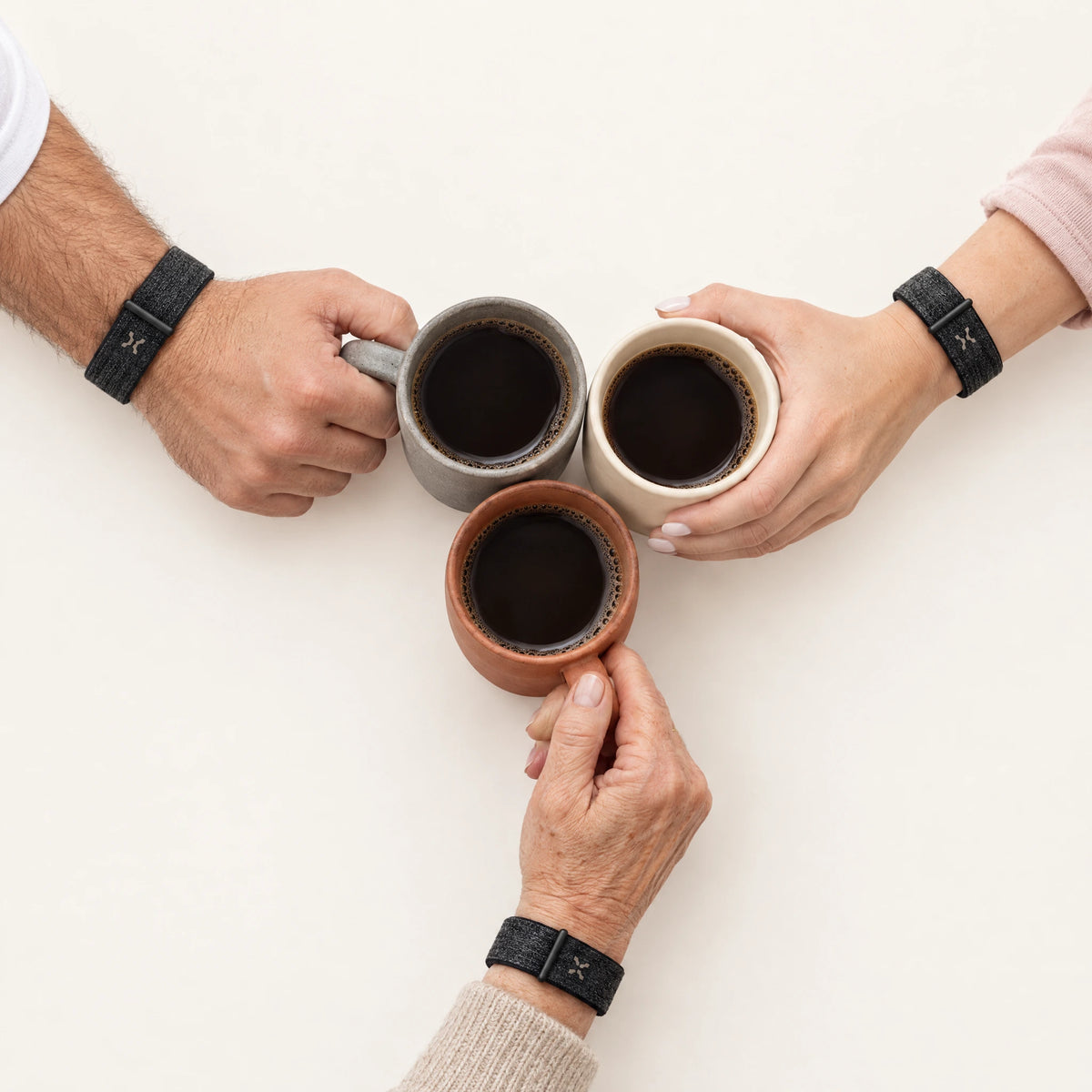
Couples and households (2- and 3-Band bundles)
– Less suited to
Anyone wanting smartwatch apps, calls or GPS
Measuring blood pressure (use an upper-arm cuff monitor)
People who won't open an app regularly
Buyers who only shop in high-street stores
Designed to disappear on the wrist: the Band 2.0 is meant to be worn day and night, including in bed.
Hume Band 2.0 Technical Specifications
The key technical specs of the Hume Band 2.0 at a glance:
Swappable knit strap · 8 extra colours sold separately
App
Free Hume Health app · optional Premium for AI coaching
Warranty / returns
1-year warranty · 45-day returns window
ℹ️ About these specs:
All figures come from Hume Health. Real-world battery life depends on how often you sync and which features are active. Hume also lists compatibility with Apple Health and Google Fit.
Hume Band 2.0 Alternatives: What Else Is There?
If you're comparing wearable health trackers before you buy, these are the alternatives worth knowing:
Whoop
The best-known screenless recovery band, with strong training and strain features. It is sold as a membership, so the cost continues for as long as you use it.
Oura Ring
Excellent for sleep and readiness in a discreet ring form. Most insights are part of a membership, and its rated battery life is shorter than the Hume Band 2.0's.
Fitbit Air
Google's screenless band, launched in May 2026: no subscription required for core features, up to 7 days of battery according to Google, and an optional paid tier in the Google Health app.
Amazfit Helio Strap
A screenless, training-focused band from Amazfit: no required subscription, up to 10 days of battery according to Amazfit, and it can be worn on the wrist or upper arm. It works with the Zepp app.
Garmin Cirqa
Garmin's first screenless band, launched in July 2026: no subscription for daily features, up to 10 days of battery, and it can be worn on the wrist or upper arm. A natural choice for existing Garmin Connect users.
Other subscription-free bands (e.g. HLTH)
Several smaller brands sell screenless bands. When comparing, look at battery life, how detailed the app is, and the return terms on offer.
Hume Band 2.0 Price: Where to Buy in 2026
The Hume Band 2.0 is a one-off purchase with no required subscription. The exact price depends on how many Bands you order and on Hume's current promotion, and it can change at any time, so the official store is the only reliable source for today's price. Orders include free shipping, a 1-year warranty and the 45-day returns window, and you can add extra straps in eight colours.
According to Hume, the Band 2.0 sensor is rated IP68: dustproof and water-resistant up to 1 metre for up to 2 hours, so you can keep it on in the shower, in the pool and during workouts.
According to Hume, the Band 2.0 is designed to be worn 24/7, including in bed, and its adjustable strap fits a wide range of wrist sizes. Hume also says it is flexibly designed to be worn off the wrist. Straps swap in seconds without tools, and Hume sells extra Band 2.0 straps in eight colours.
For most people who want sleep, recovery and long-term health tracking without a monthly fee, yes. Core tracking and the Hume Health app come with the device, Hume rates the battery at up to 14 days, and the official store offers free shipping and a 45-day returns window. It is less suited to anyone who wants a full smartwatch with apps, calls and maps.
Both are screen-free wristbands focused on recovery, sleep and strain. The main difference is the business model: Whoop is sold as an ongoing membership, while the Hume Band 2.0 is a one-off purchase with an optional Premium upgrade for AI coaching. Hume also connects with the Hume Pod body composition scale. If you mainly pay for Whoop to see sleep and recovery data, the Hume Band 2.0 is the obvious alternative to look at.
They are different kinds of device. An Apple Watch is a full smartwatch with a screen, apps, calls and notifications, and most people charge it every day or two. The Hume Band 2.0 has no screen and no notifications; it is built to stay on your wrist day and night and focuses on sleep, recovery, longevity scores and blood pressure trends. Some people wear a smartwatch during the day and a screenless band for sleep and recovery.
Both are screenless bands with no subscription required for core features. Google rates the Fitbit Air at up to 7 days of battery, and it works with the Google Health app, with an optional paid tier. Hume rates the Band 2.0 at up to 14 days and adds longevity scores such as Pace of Aging and Metabolic Momentum, blood pressure trend insights and pairing with the Hume Pod scale.
Both are screenless bands with no required subscription. Amazfit rates the Helio Strap at up to 10 days of battery and leans towards training, with workout modes and wrist or upper-arm wear. Hume rates the Band 2.0 at up to 14 days and focuses on longevity scores, blood pressure trend insights and pairing with the Hume Pod scale.
Both are screenless bands with no subscription for daily features. Garmin rates the Cirqa at up to 10 days of battery and it suits people already using Garmin Connect. Hume rates the Band 2.0 at up to 14 days and adds longevity scores, blood pressure trend insights and pairing with the Hume Pod scale.
Oura is a ring focused on sleep and readiness, and most of its insights sit behind a membership. The Hume Band 2.0 is worn on the wrist, Hume rates it at up to 14 days per charge, and core data is free. Choose Oura if you strongly prefer a ring; choose Hume if you want longer battery life and no required subscription.
The price depends on how many Bands you order (1, 2 or 3) and on Hume's current promotion, so it changes from time to time. It is a one-off purchase with no required subscription, and the official store * shows today's price in New Zealand dollars, with free shipping and a 45-day returns window.
No. Hume states that no subscription is needed to use the Band or see your core scores and data. An optional Hume Premium membership adds AI-driven coaching and deeper reports.
Up to 14 days on a single charge with typical use, according to Hume. A full charge takes roughly 20 to 80 minutes depending on the remaining battery. Frequent syncing and continuous tracking can shorten battery life slightly.
It shows blood pressure and cardiovascular trends over days and weeks rather than single cuff-style readings. It is not a replacement for a blood pressure cuff or a medical diagnosis. For actual readings, use a validated upper-arm cuff monitor, and if you have high blood pressure, follow your GP's advice.
According to Hume, Band 2.0 adds improved signal processing, cardiovascular and blood pressure trend insights, up to 14 days of battery life and a more comfortable all-day strap.
We did not find a public discount code that beats the official store. Hume runs its promotions directly on its own website, so the simplest way to see today's offer is the official Hume store *.
Our Verdict: The Subscription-Free Recovery Band We'd Pick
The Hume Band 2.0 isn't a smartwatch and doesn't try to be. What it does — sleep, recovery, heart and long-term health tracking with up to 14 days of battery and no mandatory monthly fee — it does very well. If you want to understand how your habits shape your health without paying a membership to see your own data, this is the band we'd choose. Free shipping and the 45-day returns window keep the risk low.
 Check